
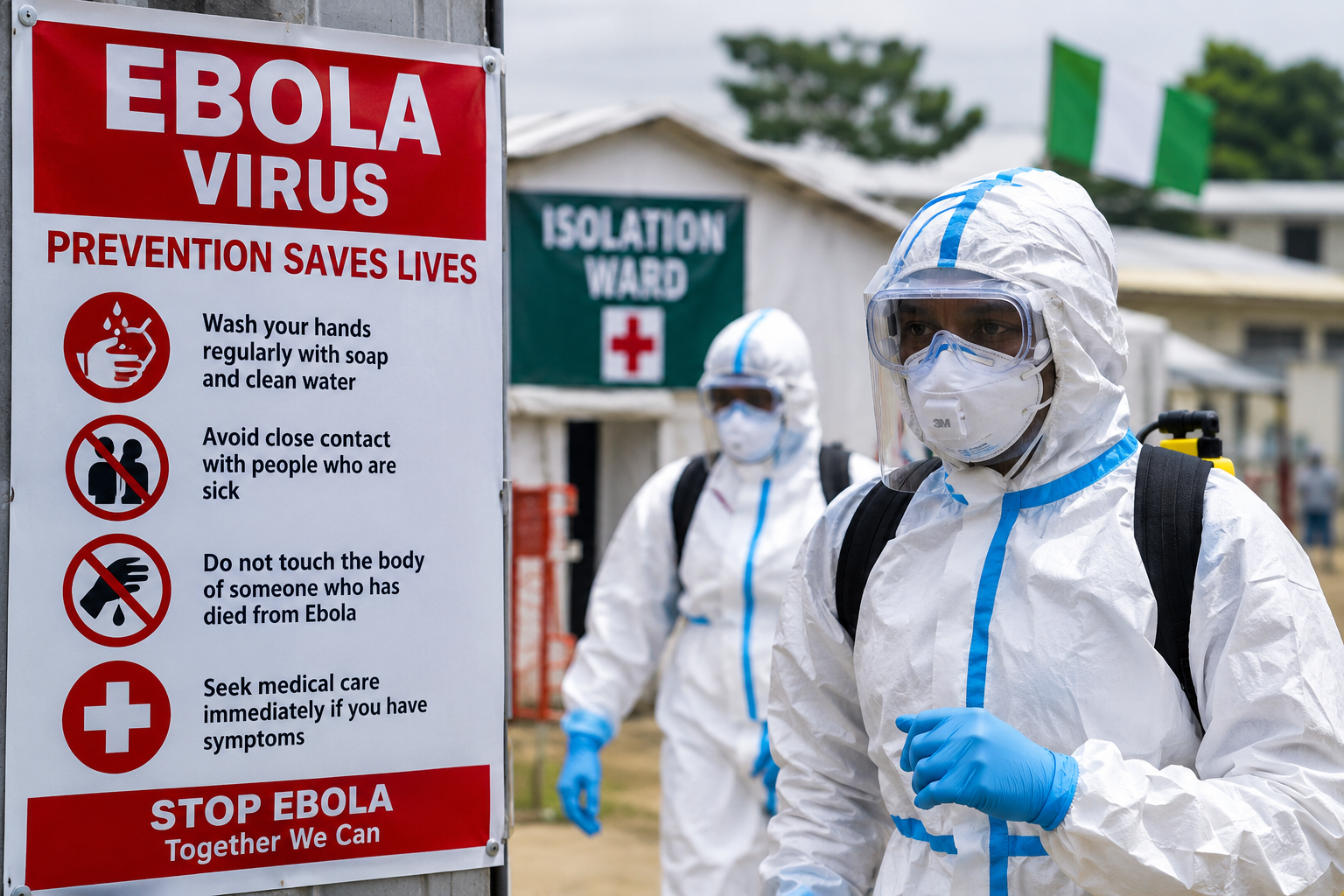
Ebola in Nigeria: FG Gives Fresh Update on Abuja Case as Health Authorities Intensify Surveillance
Nigeria’s Federal Government has released a fresh update on the confirmed Ebola case in Abuja, urging residents to remain calm and follow official health guidelines as authorities intensify efforts to prevent further transmission.
The Federal Government has provided an update on Nigeria’s confirmed Ebola case in the Federal Capital Territory (FCT), Abuja, following laboratory confirmation of the infection on October 20, 2026.
According to the World Health Organization (WHO), the patient is a woman who recently travelled to Nigeria from Uganda. She is currently in isolation and receiving medical care.
Health authorities have identified 44 contacts for monitoring as part of ongoing efforts to determine whether anyone else may have been exposed to the virus.
FG Releases Fresh Update on Ebola Case
In an update released on October 23, the Federal Government disclosed that genetic analysis showed the virus identified in Nigeria was genetically related to the virus detected in a case in Kenya.
However, officials stressed that further investigations are necessary to determine whether the two cases are directly connected.
The government also confirmed that identified contacts remain under active monitoring, with some testing negative while other results are still pending.
Authorities are continuing investigations and strengthening disease surveillance, laboratory testing and infection prevention measures.
What Nigerians Should Know About Ebola
Ebola is a serious infectious disease that can cause severe illness.
According to the WHO, the virus can spread through direct contact with the blood or other bodily fluids of an infected person, contaminated materials, or the body of someone who has died from the disease.
Symptoms may include:
- Fever
- Severe headache
- Muscle pain and weakness
- Fatigue
- Sore throat
- Vomiting and diarrhoea
Symptoms can appear between two and 21 days after exposure.
However, these symptoms can also occur with other illnesses. Only appropriate medical assessment and testing can establish whether someone has Ebola.
How Nigerians Can Protect Themselves
As health authorities continue their response, members of the public are encouraged to take sensible precautions.
- Avoid direct contact with the blood and other bodily fluids of anyone suspected of having Ebola.
- Wash your hands regularly with soap and clean water or use an appropriate hand sanitiser.
- Avoid handling the body of someone suspected or confirmed to have died from Ebola.
- Do not share unverified reports or rumours about suspected cases.
- Seek medical advice promptly if you develop concerning symptoms after a possible exposure, and tell healthcare workers about your exposure history before arriving at a facility.
Anyone who believes they may have been exposed should contact public health authorities for guidance rather than attempting to manage a suspected infection alone.
Is There an Ebola Outbreak Across Nigeria?
As of the latest official information available for this report, Nigeria has confirmed one imported case in Abuja.
The identification of a confirmed case does not automatically mean the virus is spreading throughout the country. Contact tracing, monitoring and other public health measures are intended to identify possible additional infections and prevent further transmission.
The situation may change as investigations continue, so Nigerians should follow updates from the Nigeria Centre for Disease Control and Prevention (NCDC), the Federal Ministry of Health and Social Welfare, and the WHO.
Final Words
The confirmation of an Ebola case in Abuja has renewed attention to public health preparedness in Nigeria.
While the situation requires vigilance, the public should avoid unnecessary panic and rely on verified information from health authorities.
Early reporting, appropriate medical care, contact tracing and cooperation with public health officials remain important in preventing further transmission.
Stay informed with KINGDVIBES for verified updates on Nigeria’s health, entertainment and trending news.
Sources
- World Health Organization (WHO)
- Federal Ministry of Health and Social Welfare
- Nigeria Centre for Disease Control and Prevention (NCDC)